Andy Warhol
Andy Warhol, a visionary who blurred the lines between high art and commercial culture, dedicated his career to celebrating the mundane and the iconic through the mechanical lens of mass production and the vibrant surface of fame.
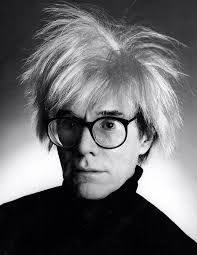
History/awards
Andy Warhol was the foundational figure of Pop Art, born in Pittsburgh in 1928 to Slovakian immigrant parents. His career began in 1950s New York as a high-profile commercial illustrator, where his whimsical shoe drawings earned him multiple prestigious Art Directors Club awards. However, his path shifted in the early 1960s when he began using silkscreen printing to depict everyday consumer objects, like Campbell’s Soup cans, and celebrities like Marilyn Monroe, effectively blurring the line between fine art and mass production.
Throughout the 1960s, Warhol turned his studio, The Factory, into a cultural epicenter for "superstars," musicians, and underground filmmakers, though his life was nearly cut short by an assassination attempt in 1968. Despite the controversy surrounding his "business art" approach, he became a global media icon, even hosting his own show on MTV in the 1980s. He died in 1987 following a routine surgery, leaving behind a legacy that transformed the artist into a brand; today, he is honored by the Andy Warhol Museum, the largest museum in North America dedicated to a single artist.
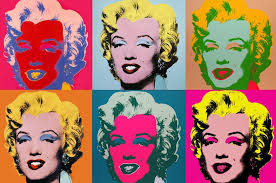
style
Warhol’s style was defined by a deliberate move away from the "hand of the artist," favoring a mechanical aesthetic that mirrored the industrial world. His most significant contribution to form was the adaptation of the photographic silkscreen process, which allowed him to mass-produce images with a detachment that challenged traditional notions of fine art. By repeating subjects in rigid grid formations, he mimicked the assembly lines of factories and the repetitive nature of advertising, suggesting that anything—from a soup can to a movie star—could be a commodity.
His visual language relied on a high-contrast, vibrant color palette of flat neons and synthetics, often applied with "off-register" printing that resulted in intentional smudges and misalignments. These technical imperfections served to emphasize the tension between the human element and the machine-made image. Before his silkscreen era, he utilized a unique "blotted line" technique in commercial illustration, creating jagged, ink-soaked traces that foreshadowed his career-long obsession with the reproduction and distribution of imagery. Ultimately, his form was one of appropriation, where he transformed found photographs into iconic symbols of American consumerism.
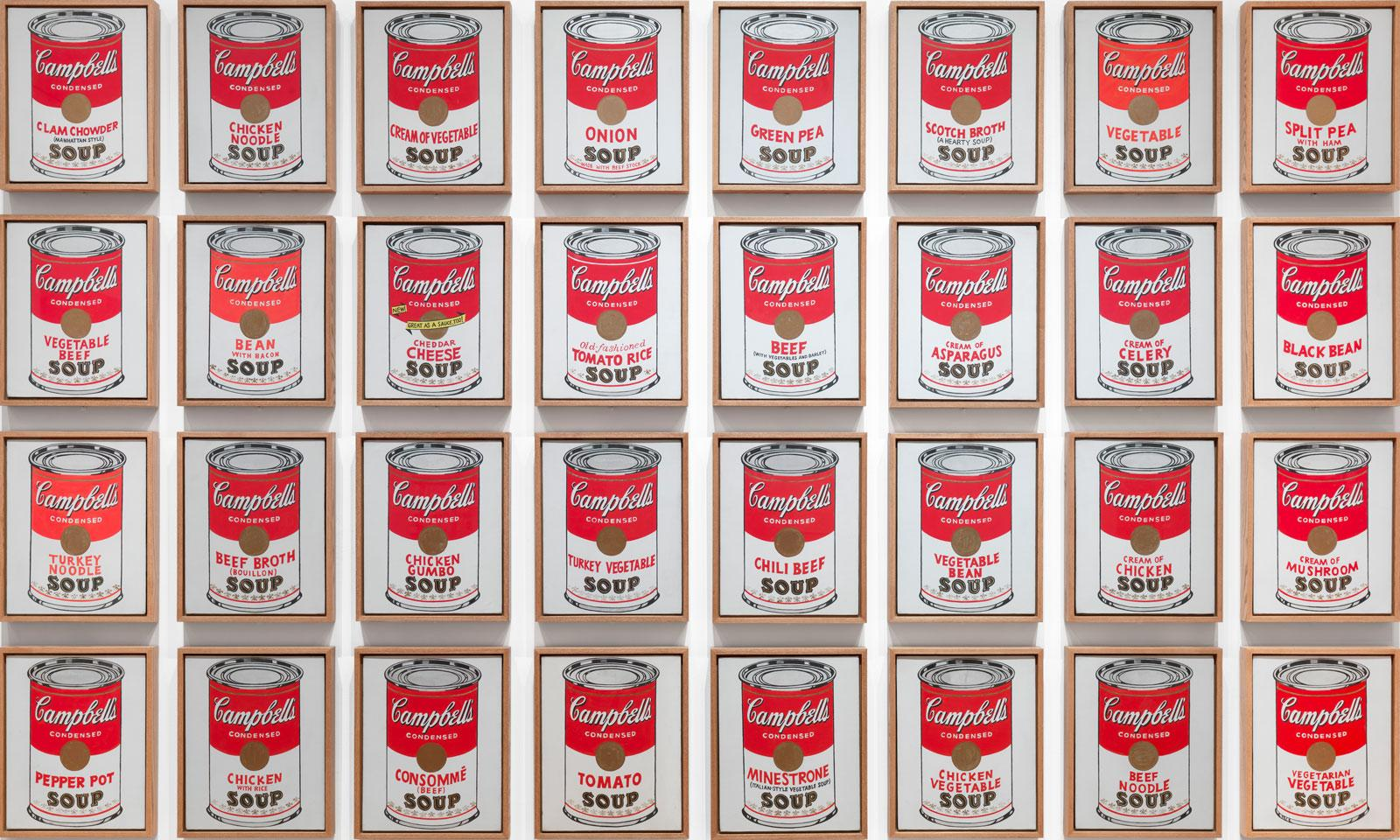
My appreciation
Appreciating Andy Warhol requires recognizing his radical role as the mirror of modern society, where he elevated the mundane and the commercial to the status of high art. By stripping away the traditional emotional weight of the artist’s brushstroke, he forced us to confront the beauty and the banality of our own consumer-driven lives. To appreciate Warhol is to understand that his work was not just about soup cans or celebrities, but about the democratization of art; he proved that a common object could be iconic and that fame itself was a medium to be manipulated. His ability to capture the "fifteen minutes of fame" phenomenon long before the digital age makes his work feel incredibly prescient today. Ultimately, one appreciates Warhol for his courage to embrace the "surface" of things, challenging us to find meaning in the very images that define our shared cultural landscape.
Create Your Own Website With Webador